Newborn Screening: Quick Inverted‑Pyramid Guide
16/4/2026
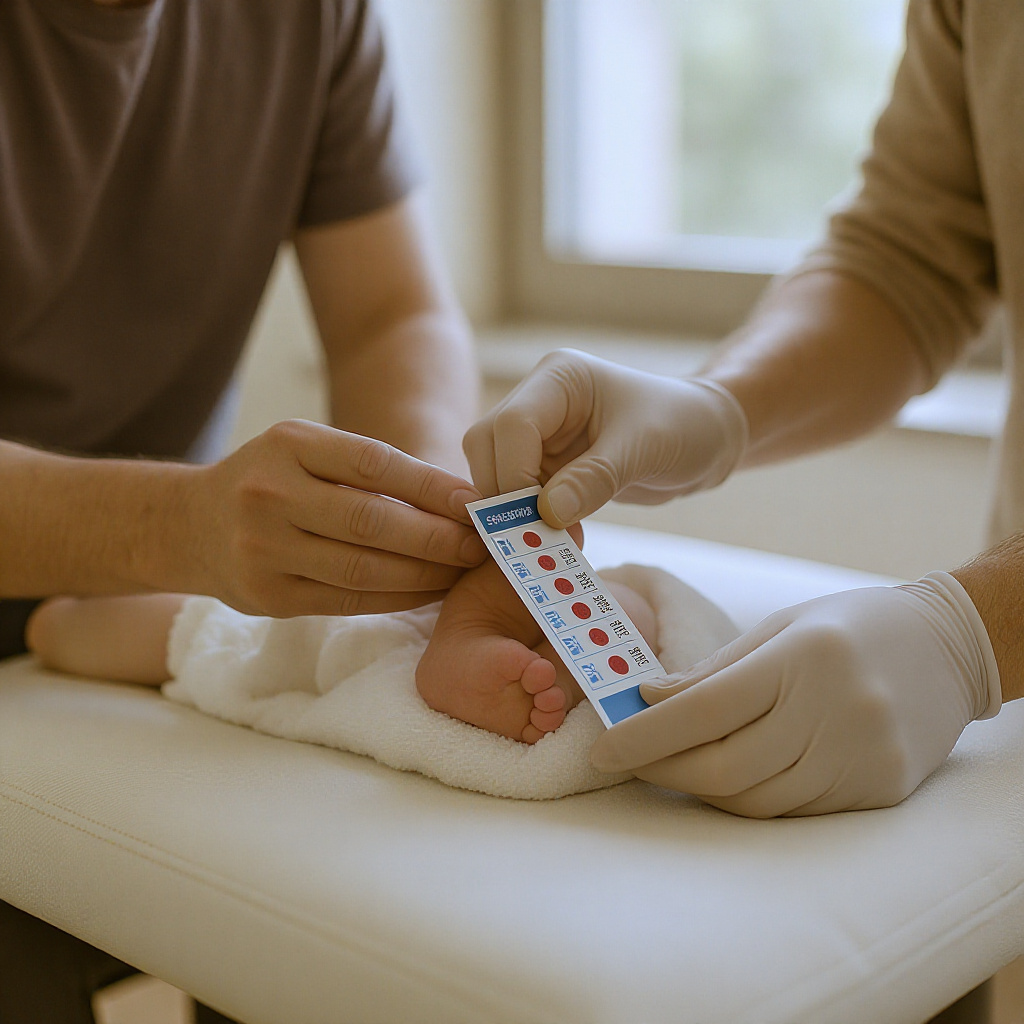
Main point: Newborn screening is a routine, quick heel‑prick test that finds rare but treatable conditions early so care can start right away.
TL;DR
- Routine test done soon after birth to detect treatable conditions.
- Most results are normal; flagged results prompt follow‑up, not a diagnosis.
- Ask who will tell you results and save contact info now.
Top 3 next actions
- Ask your care team when the screen and any hearing/pulse‑ox checks will happen.
- Save contact info for your baby’s pediatrician and your state newborn screening program.
- If a result is flagged, arrange confirmatory tests promptly and get specialist contact details.
Key caution
- A flagged or positive screen is not a diagnosis—timely confirmatory testing is essential.
Why it matters (supporting details)
- Screens commonly look for metabolic, endocrine, hemoglobin disorders and hearing loss; panels vary by state.
- The heel prick is quick and gentle; labs run multiple tests from a small blood‑spot card.
- Results may take days to weeks; urgent findings trigger immediate contact from your care team.
Background & quick tips
- Check your state health department or the CDC for the exact panel and program contact info.
- Keep a simple record: test date, who to call, and any follow‑up appointments or notes.
- Small coping steps help—take short breaks, bring a support person, and write down questions for visits.
These simple steps give you control and make follow‑up smoother so you can focus on your baby’s comfort and care.
Articles for you

Sleep Sacks: The Safer, Cozier Solution for Baby’s Best Night Sleep
Problem: Loose blankets and tight swaddles can shift, tangle, or overheat your baby—disrupting sleep, raising SIDS concerns, and leaving you exhausted...

Understanding Teething: How to Recognize and Soothe Teething Pain in Your Little One
Experiencing teething as a new parent can be a whirlwind of emotions and new experiences. Understanding what teething is, the signs, and how to soothe...

Understanding Your Baby's First Year Milestones: A Gentle Guide for New Parents
Watching your baby grow is akin to reading a fascinating book. Each chapter brings its own surprises, laughter, and perhaps a few moments of doubt. Un...